
Artificial intelligence headlines are often dominated by talk of disruption, automation, and jobs replaced by algorithms. It’s easy to get swept up in the hype — or lost in the noise. But beyond the bold claims and billion-dollar valuations, a new wave of ai startup disruptors is emerging with a different mission: using advanced technology to tackle real human challenges. The problem is that meaningful innovation can be hard to spot amid flashy product launches and speculative promises. In this article, we cut through the clutter to highlight startups applying AI in practical, measurable ways across critical sectors — proving it can be a force for genuine good.
Revolutionizing Healthcare: AI in Diagnostics and Personalized Medicine
Artificial intelligence is reshaping modern medicine by pairing computational speed with clinical expertise. In simple terms, machine learning—algorithms that improve as they process more data—can detect patterns invisible to the human eye.
Consider predictive diagnostics. Traditional radiology relies on specialists reviewing MRIs or CT scans image by image. Even the best clinicians can miss subtle early markers of cancer or Alzheimer’s. Now compare that with an AI system trained on millions of scans: it flags microscopic anomalies in seconds, offering probability scores and risk stratification. A startup in this space demonstrated earlier tumor detection rates compared to conventional reviews, reducing diagnostic delays that often cost lives (National Cancer Institute). A vs. B is stark: hours of manual review versus near-instant computational analysis—with physicians making the final call.
Drug discovery tells a similar story. Historically, developing a new drug can take over a decade and billions in funding (Tufts Center for the Study of Drug Development). Machine learning models now simulate complex biological systems, predicting viable compounds before lab testing begins. Instead of trial-and-error chemistry, researchers get prioritized candidates—like moving from a blindfolded dart throw to a GPS-guided route.
Critics argue AI risks depersonalizing care. Yet the opposite is unfolding. These ai startup disruptors augment physicians, enabling personalized medicine—treatments tailored to genetic and lifestyle data. Think less guesswork, more precision (no sci-fi robots required). The result: faster breakthroughs, sharper diagnoses, and better patient outcomes.
Climate Tech’s New Engine: AI for a Sustainable Planet
Have you ever wondered how we’re supposed to balance rising energy demand with a planet that’s already overheating? It’s easy to feel like the math just doesn’t work. And yet, artificial intelligence is quietly rewriting that equation.
Consider smart grid optimization. One emerging startup uses AI to predict electricity demand in real time, reroute power to prevent outages, and seamlessly integrate renewables like wind and solar. A smart grid is simply an energy network that uses digital technology to monitor and manage electricity flow. With AI analyzing weather patterns and usage spikes, utilities can reduce waste and avoid blackouts (which, let’s be honest, always seem to happen during heatwaves). According to the International Energy Agency, smarter grids are essential for scaling renewables globally.
Then there’s precision agriculture. Imagine drones scanning crops, while soil sensors feed data into machine learning models. Farmers receive exact recommendations on water and pesticide use—cutting inputs while boosting yields. The FAO estimates agriculture accounts for roughly 70% of global freshwater withdrawals, so even modest efficiency gains matter.
Skeptics argue AI consumes massive energy itself. Fair point. Training large models can be resource-intensive. However, targeted systems designed for grid management or crop analytics are far leaner—and their environmental savings often outweigh their footprint.
So where does that leave us? In a world where ai startup disruptors aren’t just chasing profit—they’re optimizing the very systems that sustain life. AI provides the analytical power to manage complex environmental networks and push us meaningfully toward carbon neutrality.
Democratizing Knowledge: AI in Education and Accessibility
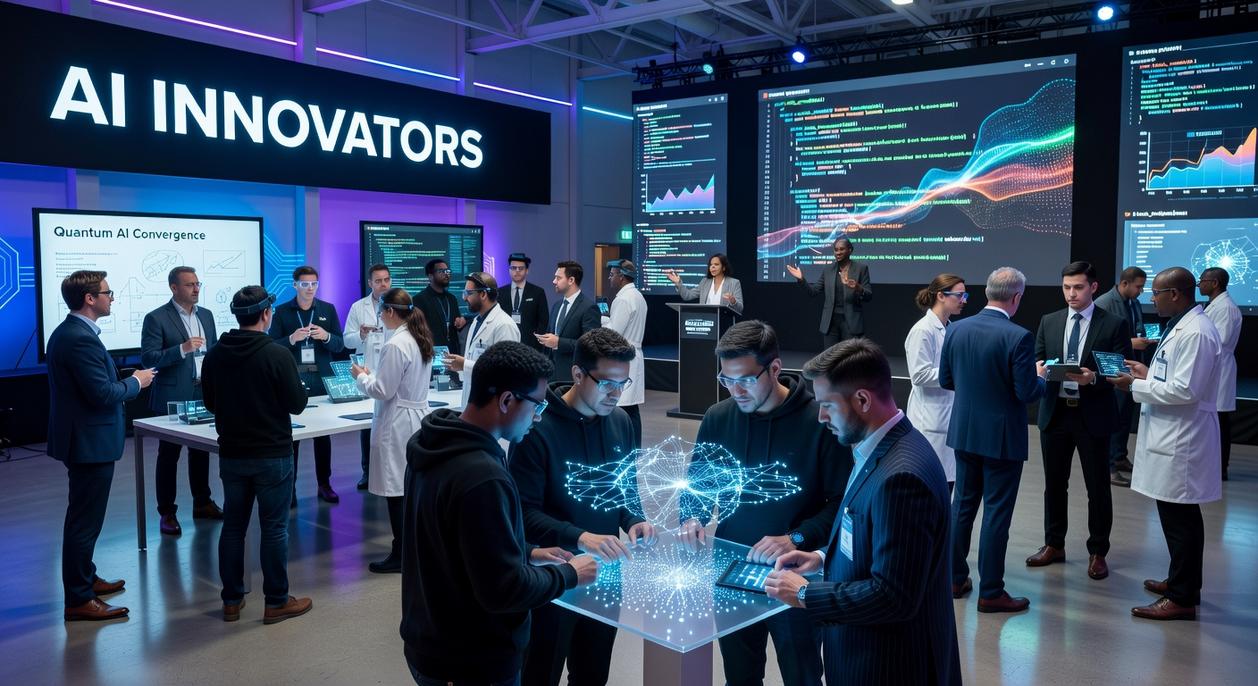
Artificial intelligence is steadily reshaping education—not as a futuristic concept, but as a practical tool embedded in everyday learning. At its core, adaptive learning (software that adjusts content based on a learner’s performance) uses algorithms to analyze strengths, weaknesses, and pace. For example, platforms like DreamBox and Squirrel AI track student responses in real time, then generate personalized lesson paths. Instead of a one-size-fits-all curriculum, students receive targeted exercises where they struggle and accelerated material where they excel. As a result, engagement rises and dropout rates fall (McKinsey, 2023).
Some critics argue this data-driven approach reduces education to metrics and screens. That concern isn’t trivial. However, when implemented thoughtfully, adaptive systems support teachers rather than replace them—freeing educators to focus on mentorship and critical thinking (think “Dead Poets Society,” but with smarter dashboards).
Meanwhile, assistive technology is pushing accessibility forward. Tools like Microsoft’s Seeing AI provide real-time audio descriptions for visually impaired users, while advanced speech-to-text engines such as Google’s Live Transcribe convert spoken language into instant captions. These features don’t just add convenience—they enable independence in classrooms, workplaces, and public spaces.
Importantly, ai startup disruptors are accelerating these innovations, embedding accessibility directly into product design rather than treating it as an afterthought.
And yet, skeptics worry about job displacement amid automation debates, as discussed in big tech layoffs explained causes and long term impact. Still, the broader trajectory is clear: by tailoring experiences to individual needs, AI is making learning—and the world itself—more inclusive and equitable.
Building Trust in the Code: The Rise of Ethical AI Governance
As AI systems shape hiring, lending, and healthcare decisions, one often-overlooked priority is making them fair and accountable. Enter startups building bias-detection and Explainable AI (XAI) tools—software that audits algorithms for hidden racial or gender bias and translates complex model outputs into human-readable reasoning. Think of it as a spell-checker, but for ethics.
Some critics argue regulation slows ai startup disruptors and stifles innovation. But unchecked bias can trigger lawsuits, reputational damage, and regulatory fines (the FTC has already warned companies about discriminatory AI practices, 2023). Ethical guardrails aren’t brakes—they’re seatbelts.
Practical steps to apply now:
- Run third-party bias audits before deployment.
- Document training data sources.
- Require explainability reports for high-stakes models.
Transparent systems build durable trust.
The Next Frontier: Human Ingenuity, Amplified by AI
The startups highlighted here are more than ambitious ventures—they represent a powerful wave of ai startup disruptors defining technology by the problems it solves, not just the capabilities it showcases. From smarter healthcare systems that anticipate patient needs, to climate-focused platforms building a healthier planet, to adaptive learning tools expanding access to education, the impact is tangible and far-reaching.
Your exploration of this frontier reveals a clear truth: real innovation happens when human vision guides artificial intelligence with purpose. Together, they are not just reshaping markets—they are creating meaningful, lasting change that extends well beyond them.