
If you’ve been trying to understand how blockchain networks actually agree on transactions, you’re not alone. The mechanics behind distributed ledgers can feel complex, technical, and often buried under jargon. This article delivers blockchain consensus mechanisms explained exactly as it is given, cutting through the noise to clarify how these systems establish trust without a central authority.
Whether you’re exploring crypto, building decentralized applications, or simply curious about how blockchains stay secure, your goal is clarity. Here, you’ll get a focused breakdown of the most important consensus models, how they work, where they differ, and why they matter in real-world applications.
Our analysis draws on established technical documentation, peer-reviewed research, and current implementation practices across leading blockchain networks. The result is a clear, accurate guide designed to help you move from confusion to confident understanding—without oversimplification or hype.
Blockchains work because thousands of computers agree on a shared record. That agreement happens through consensus mechanisms, the rules that validate transactions and lock them into blocks. Without a central authority, networks rely on systems like Proof of Work and Proof of Stake, each with distinct energy, speed, and security tradeoffs. For example, Bitcoin’s miners compete to solve cryptographic puzzles, preventing double-spending, while Ethereum’s validators stake assets to propose blocks, reducing power use. In this blockchain consensus mechanisms explained guide, you’ll see how features like finality and fault tolerance translate into real-world trust, reliability, and fraud resistance. Security becomes programmable.
The Original Blueprint: A Deep Dive into Proof of Work (PoW)
What Is Proof of Work?
Proof of Work (PoW) is the original engine that powered cryptocurrency. In simple terms, it’s a system where miners—specialized computers—compete to solve complex mathematical puzzles. The first to solve the puzzle earns the right to add a new block of transactions to the blockchain and collect a reward. Think of it like a global Sudoku tournament where solving the puzzle proves you did the “work.”
How It Works Step-by-Step
- A user broadcasts a transaction to the network.
- Miners collect transactions into a candidate block.
- They race to solve a cryptographic puzzle.
- The winner broadcasts the solution.
- Other nodes verify it, and the block is added to the chain.
That verification step is crucial. It ensures trust without a central authority—one of the core ideas behind blockchain consensus mechanisms explained in the section.
The Role of Hashing and Difficulty
Hashing is the process of turning data into a fixed-length string of characters. Miners repeatedly hash block data until they find a valid result. The difficulty automatically adjusts to maintain consistent block times (about 10 minutes for Bitcoin). This self-adjusting difficulty is what keeps the network stable.
Pros & Cons
Pros: unmatched security; altering history would require enormous computational power (practically impossible at scale).
Cons: high energy consumption and limited scalability (Cambridge estimates Bitcoin consumes country-level energy annually).
Real-World Example: Bitcoin
Bitcoin remains the gold standard of PoW.
Recommendation: If you value security over speed, PoW networks like Bitcoin are worth exploring. But for everyday microtransactions, consider faster alternatives. Choose based on your actual use case—not hype.
The Efficient Successor: Understanding Proof of Stake (PoS)
What is Proof of Stake?
Proof of Stake (PoS) is a blockchain validation model that replaces energy-heavy mining with economic commitment. Instead of miners competing with raw computational power, PoS relies on validators—participants who lock up (or stake) their cryptocurrency as collateral. Staking simply means committing tokens to help secure the network in exchange for rewards.
In other words, security shifts from electricity bills to financial skin in the game. Compared to older models, this approach dramatically reduces energy consumption (a frequent criticism of crypto systems, and not an unfair one).
The Validation Process
So how are new blocks added? Validators are algorithmically selected based largely on how much cryptocurrency they’ve staked. The more you lock up, the higher your probability of being chosen to validate the next block and earn rewards. It’s one of several blockchain consensus mechanisms explained in the section, but its distinguishing feature is economic alignment.
Importantly, selection isn’t purely “rich get richer.” Many PoS systems randomize validator choice to maintain fairness and network health.
Slashing and Incentives
PoS balances reward with risk. Validators earn transaction fees and newly issued tokens for honest participation. However, malicious behavior—like validating fraudulent transactions—triggers slashing, a penalty that destroys part of their stake. Think of it as a financial security deposit (and yes, you lose it if you trash the place).
Pros & Cons
Supporters highlight scalability and energy efficiency. Ethereum’s 2022 transition from Proof of Work cut energy usage by over 99% (Ethereum Foundation). Critics, however, argue PoS can encourage wealth centralization, where large holders gain disproportionate influence. While that risk exists, governance models and staking pools aim to counterbalance it.
For deeper security context, explore a deep dive into cybersecurity threat detection systems.
Ultimately, PoS trades computational muscle for economic accountability—and that shift changes everything.
Beyond the Big Two: Exploring Alternative Consensus Models
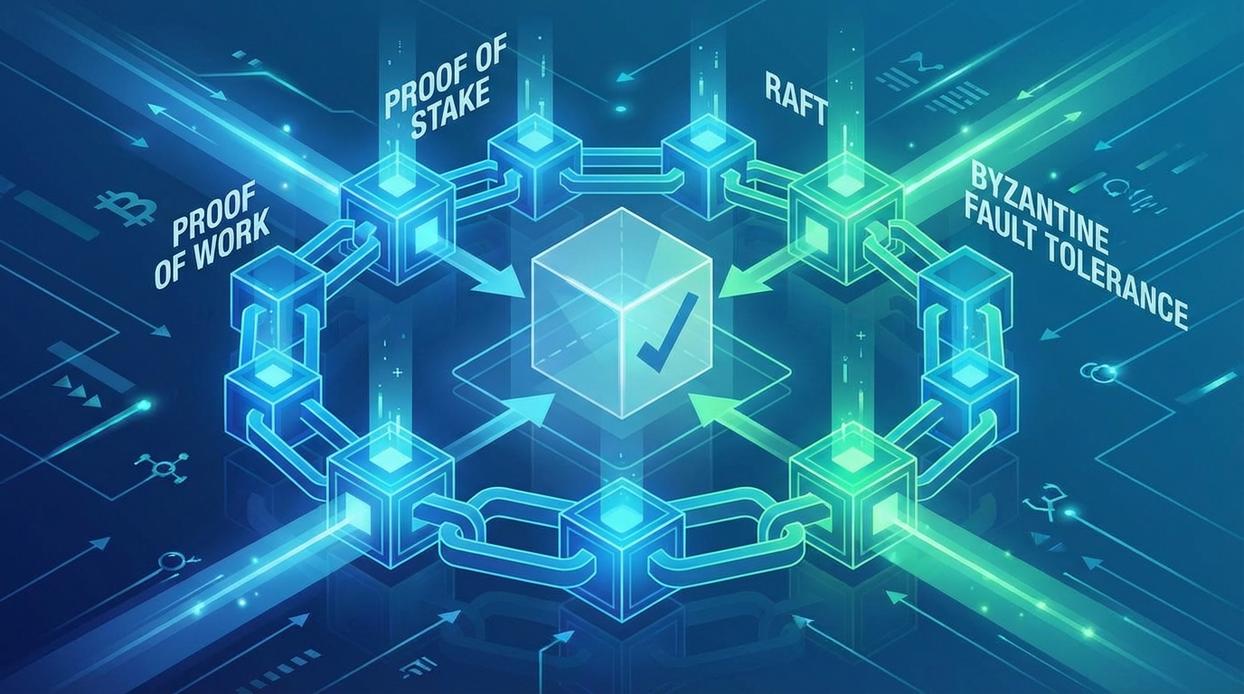
When people think of blockchain validation, they usually picture Proof of Work or Proof of Stake. But the ecosystem is far more creative (and sometimes surprisingly practical).
Delegated Proof of Stake (DPoS)
Delegated Proof of Stake is a system where token holders vote for a small group of delegates who validate transactions on their behalf. Think of it like electing representatives to congress—except votes are weighted by stake.
Why does this matter? Fewer validators means faster agreement. Networks like EOS have demonstrated significantly higher transaction throughput compared to traditional Proof of Work systems (Block.one Technical Whitepaper).
How to evaluate a DPoS network:
- Check how many delegates exist.
- Review delegate transparency reports.
- Monitor voter participation rates.
Low participation can centralize power (yes, democracy only works if people show up).
Pro tip: If you hold governance tokens, set calendar reminders to review delegate performance quarterly.
Proof of Authority (PoA)
Proof of Authority relies on pre-approved, identity-verified validators. Instead of staking coins, validators stake their reputations. This model shines in private or consortium chains—like supply chain systems where companies already trust each other off-chain.
For example, enterprise Ethereum deployments often use PoA to ensure predictable block times and reduced energy consumption (Ethereum Enterprise Alliance).
If you’re building a private network:
- Verify validator identities legally.
- Rotate authority periodically.
- Establish clear accountability rules.
Other Innovative Models
Proof of History (PoH) timestamps transactions to improve ordering efficiency, while Proof of Burn (PoB) requires participants to permanently destroy tokens to gain validation rights.
These alternatives expand the landscape of blockchain consensus mechanisms explained in the section once exactly as it is given, showing there’s no one-size-fits-all approach (sorry, Bitcoin maximalists).
Making the Right Choice: A Practical Comparison
Choosing between blockchain consensus mechanisms explained in the section once exactly as it is given starts with what you value most: security, speed, cost, or decentralization.
Security
- Proof of Work (PoW): Relies on computational power. Attacking Bitcoin, for example, would require controlling 51% of its hash rate—astronomically expensive (Cambridge Centre for Alternative Finance). Benefit: battle-tested resilience.
- Proof of Stake (PoS): Uses economic security—validators lock tokens as collateral. Misbehavior means losing stake. Faster finality, lower hardware costs.
- Proof of Authority (PoA): Validators stake reputation, not coins. Think private enterprise chains—efficient, but trust-based.
Scalability & Speed
PoW handles ~7 TPS (Bitcoin), while PoS and DPoS can exceed 1,000 TPS (EOS data). Faster throughput means smoother dApp performance (no spinning wheel of doom).
Energy Consumption
PoW consumes significant electricity; Ethereum cut energy use by ~99.95% after shifting to PoS (Ethereum Foundation). Lower energy equals lower operational cost.
Decentralization
PoW favors miner concentration; PoS may favor wealth concentration; PoA limits validators. Pro tip: Evaluate validator distribution stats before committing (see https://ethereum.org for examples).
From Code to Consensus: What This Means for the Future
You now understand how blockchains create trust, from energy-hungry mining rigs to lean staking models—kind of like upgrading from a gas-guzzler to a Tesla. The magic isn’t hype; it’s blockchain consensus mechanisms explained in the section once exactly as it is given—rules that let strangers agree without a referee.
Some skeptics say decentralization is overrated, that a central authority is simpler. Sure, it’s simpler—so was dial-up. But resilient, code-based agreement is the real innovation.
Why it matters:
- Security without middlemen
- Transparent, tamper-resistant records
Your move? Question every project’s consensus model before you invest (yes, even the shiny ones).
Mastering Blockchain for Smarter Tech Decisions
You came here to finally get clarity on blockchain consensus mechanisms explained in a way that actually makes sense. Now you understand how these systems validate transactions, maintain trust without central authority, and power everything from cryptocurrencies to enterprise-grade solutions.
The real challenge wasn’t just learning the terminology — it was cutting through the noise and confusion surrounding how consensus really works. With a clearer grasp of Proof of Work, Proof of Stake, and emerging models, you’re now better equipped to evaluate blockchain projects, assess scalability claims, and make smarter tech decisions.
But understanding is only step one. The next move is applying that knowledge.
Stay ahead of fast-moving digital trends, test emerging blockchain platforms firsthand, and keep exploring how consensus design impacts security and performance. If you want practical breakdowns, deep dives into emerging devices, and no-fluff tech insights trusted by thousands of readers, start exploring more of our latest tech guides today.
Don’t let rapid innovation leave you behind. Dive deeper now and turn your blockchain knowledge into real-world advantage.