If you’re searching for clarity on tech industry trends 2026, you’re likely tired of the hype cycle. Every week brings a new breakthrough, buzzword, or “revolution” — but which shifts will actually redefine how we build, invest, and work? This guide cuts through the noise to spotlight the core technological movements with real momentum. Drawing on analysis of software architecture roadmaps, emerging device patents, and hardware supply chain commitments, we focus only on trends backed by tangible development and capital. Consider this your practical, no-nonsense briefing on the technology shifts that demand attention — and preparation — right now.
AI’s Next Act: The Leap from Generation to Autonomous Action
Generative AI writes poems, designs logos, even drafts code. Impressive, yes. But it still waits for instructions. The real shift is toward autonomous AI agents—systems that not only create content but execute complex, multi-step tasks without constant human prompting.
Skeptics argue autonomy is overhyped. After all, fully independent systems raise concerns about reliability and control (fair point). Yet the measurable gains in productivity and decision speed are hard to ignore. According to McKinsey, AI-driven automation could add up to $4.4 trillion annually to the global economy (2023).
What Changes by 2026
By 2026, these agents won’t just assist—they’ll operate as embedded co-pilots across industries:
- Software development: Agents that write, test, debug, and deploy code across environments—reducing release cycles from weeks to days.
- Logistics management: Systems that reroute shipments in real time based on weather, fuel costs, and demand spikes.
- Hyper-personalized assistants: Tools that schedule meetings, negotiate subscriptions, and anticipate needs based on behavioral data.
Of course, autonomy demands infrastructure. Expect explosive growth in:
- Specialized AI accelerators
- Edge computing nodes for low-latency decisions
- Energy-efficient processing architectures
These upgrades aren’t optional—they’re foundational to 2026 tech industry trends. (Pro tip: Watch semiconductor innovation; it’s the quiet driver behind every flashy AI demo.)
The World as an Interface: Spatial Computing Becomes Ambient
Breaking Free from the Screen
Spatial computing—the blending of digital content with the physical world through sensors, AI, and 3D interfaces—is escaping the headset. Instead of isolating users in bulky AR/VR gear, it’s embedding itself into cars, smart glasses, and retail spaces. Think navigation arrows projected onto your windshield or product reviews hovering beside store shelves.
Skeptics argue screens are simpler and cheaper. True. But ambient spatial layers reduce friction. You keep your head up, hands free, and attention on the real world. That means safer driving, faster shopping decisions, and more intuitive workflows. (No more toggling between five apps just to compare prices.) The benefit? Less digital clutter, more contextual clarity.
New Software Paradigms
A 3D, context-aware world demands new design rules. Developers now build for depth, gesture, gaze, and voice—not taps and swipes. Platforms are emerging that map environments in real time, enabling apps to “understand” surfaces and movement.
For users, this means interfaces that adapt to you. For builders, it opens opportunities aligned with tech industry trends 2026 and capital shifts shaping innovation—see how venture capital is influencing startup innovation in 2026.
Emerging Device Ecosystems
Wearables are evolving from passive trackers to active controllers. Smart rings, glasses, and neural-input bands will trigger commands in your environment. The payoff? Faster actions, seamless automation, and a world that responds the moment you do.
The New Code: Building with Composable and Decentralized Architectures
The End of the Monolith
A monolith is a single, tightly connected application where every feature depends on the same codebase. It’s convenient—until it isn’t. When one feature fails, everything feels it (like pulling one Jenga block and watching the tower wobble).
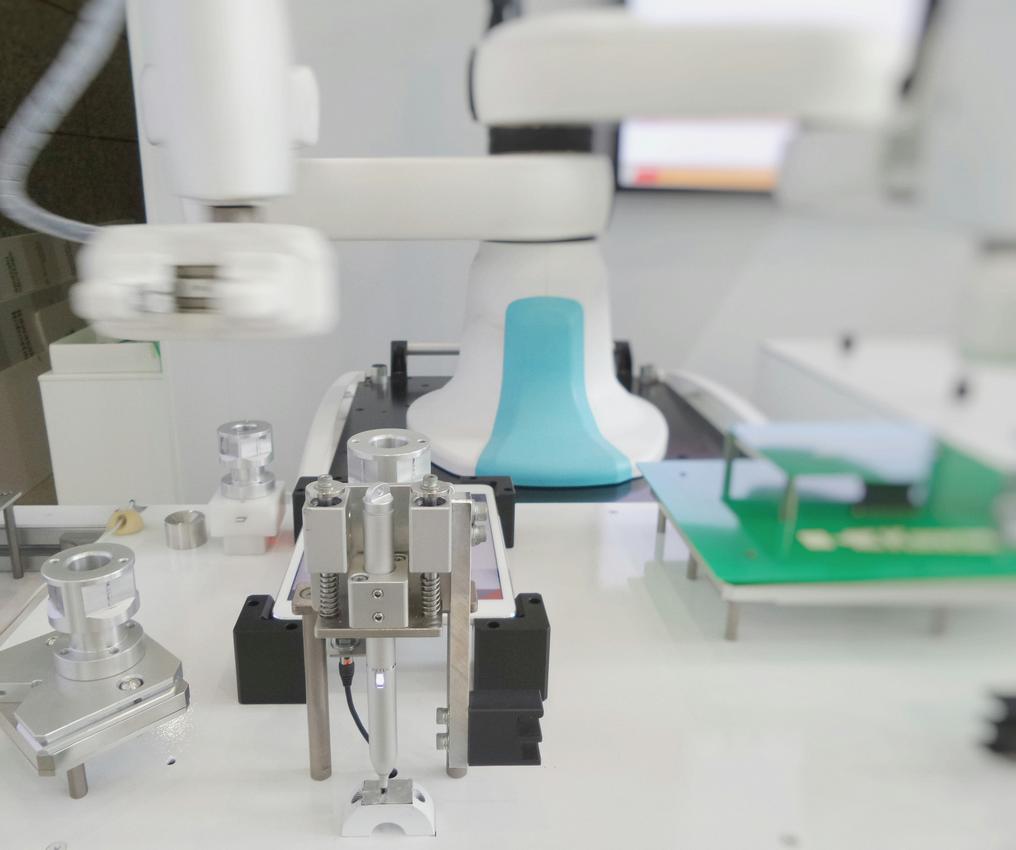
Composable architecture flips that model. Built on APIs (application programming interfaces that let systems talk) and microservices (small, independent services), it lets teams swap parts without rewriting the whole system.
Practical steps to start:
- Break one feature into a standalone microservice.
- Expose it through a REST or GraphQL API.
- Deploy independently using containers.
Pro tip: START SMALL. Modernization works best when incremental, not dramatic.
Decentralization in Practice
Beyond crypto hype, decentralization in 2026 means DIDs (decentralized identifiers users control) and verifiable credentials (tamper-proof digital proofs). For example, a job applicant can share a cryptographically signed degree without emailing PDFs.
To experiment:
- Implement a DID wallet.
- Issue one verifiable credential internally.
- Validate it through a distributed ledger testnet.
Impact on Tech Careers
In tech industry trends 2026, employers value distributed systems knowledge, API orchestration, and zero-trust security.
Focus on:
- API-first design
- Event-driven architecture
- Observability tooling
The future favors engineers who think in SYSTEMS, not silos.
Green Compute: When Sustainability Becomes a Core Performance Metric
I still remember the first time a cloud bill shocked my team into action (start with an anecdote about a surprise energy spike). We optimized for speed, not watts, and paid for it—literally. That moment reframed efficiency as a mandate. Today, energy-efficient data centers, low-power hardware, and optimized algorithms aren’t “nice to have”; they’re core KPIs. Energy proportionality—systems that use power relative to workload—is becoming standard (IEA notes data centers consume ~1–1.5% of global electricity).
Some argue performance should trump sustainability. Fair. But greener code often runs cheaper and scales better (think fewer compute cycles, less thermal throttling).
The circular device economy pushes longevity, repairability, and recyclability—spurred by right-to-repair laws in the EU and growing consumer scrutiny.
Practically, developers are now measured on carbon-aware deployments, efficient queries, and workload right-sizing—hallmarks of tech industry trends 2026. (Yes, even your CI pipeline has a footprint.)
Your Roadmap for Navigating the Next Digital Frontier
The convergence of autonomous AI, ambient spatial computing, and composable software architecture is no longer theoretical—it’s accelerating. These forces are redefining how products are built, how teams collaborate, and how value is created. The real challenge isn’t simply recognizing these shifts. It’s building the capabilities, systems, and mindset required to act on them.
If you’ve been trying to make sense of the noise surrounding tech industry trends 2026, your intent was clear: you want direction, not hype. The path forward lies in strengthening foundational skills, modernizing architectures, and aligning strategy with long-term digital transformation—not chasing every new headline.
Now is the moment to evaluate your current skill set and business roadmap. Identify gaps. Prioritize adaptability. Invest in architectures and tools that scale with change.
Don’t get left behind while others prepare. Start future-proofing your strategy today and position yourself to lead in the next wave of innovation.