
If you’re searching for clear insights on data privacy trends 2026, you’re likely trying to understand how upcoming regulations, evolving technologies, and shifting consumer expectations will affect your business, products, or personal data. The privacy landscape is changing fast—driven by AI expansion, stricter global compliance frameworks, decentralized identity systems, and growing public demand for transparency.
This article breaks down what’s actually shaping data privacy trends 2026, separating hype from real, measurable shifts. You’ll discover which regulations are gaining momentum, how companies are redesigning data architecture for privacy-by-default, and what practical steps you can take now to stay ahead.
Our analysis draws on current regulatory developments, expert commentary from cybersecurity professionals, and emerging patterns in software architecture and digital infrastructure. The goal is simple: give you actionable, trustworthy insights so you can prepare—not react—to the next wave of privacy transformation.
The New Rules of Digital Trust: What to Expect in 2026
The era of “move fast and break things” now reads like a villain origin story. In 2026, trust is infrastructure. Ignore it, and everything cracks.
Here’s what’s changing:
- Privacy by Design (building systems that protect data from the start, not as a patch). Think apps that collect only what they NEED, not your pet’s birthday.
- AI Governance (clear rules for how algorithms use data). Yes, your chatbot needs adult supervision.
- Decentralized Identity (users control digital IDs via encrypted wallets, not endless passwords).
Some argue regulation stifles innovation. Fair. But history shows strong privacy laws boost consumer confidence and adoption (Cisco, 2023). That confidence drives growth.
The real headline? data privacy trends 2026 demand ARCHITECTURE shifts, not policy memos. Pro tip: audit data flows now—future you will sleep better.
Trend 1: AI-Driven Privacy and Autonomous Compliance
Let’s be honest—managing data privacy manually is exhausting. Teams are buried in spreadsheets, compliance checklists, and endless Slack pings asking, “Who accessed this file?” Meanwhile, data keeps multiplying. By 2026, AI will be essential for managing data at scale, not as a luxury but as survival infrastructure.
Here’s the core shift: Artificial Intelligence is moving from being labeled a privacy risk to becoming the primary privacy solution. Instead of creating exposure, modern AI systems now autonomously classify sensitive data the moment it’s created (think automatic labeling of health records or financial IDs), detect anomalous access patterns in real time, and generate audit-ready compliance reports without someone pulling an all-nighter.
Still, some argue AI adds complexity and new vulnerabilities. Fair point. Poorly trained models can misclassify data. However, automated anomaly detection consistently outperforms manual monitoring in speed and scale (IBM Cost of a Data Breach Report, 2023).
As data privacy trends 2026 accelerate, software architecture must adapt. That means embedding Privacy-as-a-Service (PaaS) APIs and microservices directly into tech stacks—so compliance runs continuously, not reactively.
Practical Tech Hack: Start experimenting with open-source tools like Google’s Private Join and Compute. Spin up a sandbox environment, test secure data matching, and document edge cases. (Pro tip: begin with non-production datasets to avoid unnecessary headaches.)
Decentralized identity is moving from theory to default. Traditionally, you logged in with Google or Facebook—convenient, yes, but centralized. That model stores your credentials and behavioral data in massive databases, honey pots for breaches. In contrast, Self-Sovereign Identity (SSI) lets you hold credentials in a digital wallet and decide what to share.
Think of it as A vs B. Model A: you hand over your full driver’s license just to prove you’re over 18. In some identity workflows, a biometric Photo ID creator can also support a safer digital credential process by reducing how much raw personal information needs to move between systems. Model B: you cryptographically prove your age without revealing your address, ID number, or photo. SSI uses verifiable credentials—tamper-proof digital attestations—to grant temporary, specific, and revocable access.
Meanwhile, next-gen devices are accelerating adoption. Biometrics on wearables, AR glasses, and even smart vehicles can unlock wallets natively. Instead of typing passwords (RIP “123456”), your heartbeat pattern or facial scan authorizes a transaction seamlessly.
Critics argue centralized providers are simpler and already secure. Fair. They’ve invested billions in infrastructure. However, data privacy trends 2026 show rising consumer demand for minimal data exposure and breach reduction (Pew Research Center, 2025).
Ultimately, the shift reframes identity. The old web collected everything by default. The 2026 model loans out one verified fact for one purpose—then takes it back by design today.
Trend 3: The ‘Right to be Forgotten’ Gets Automated
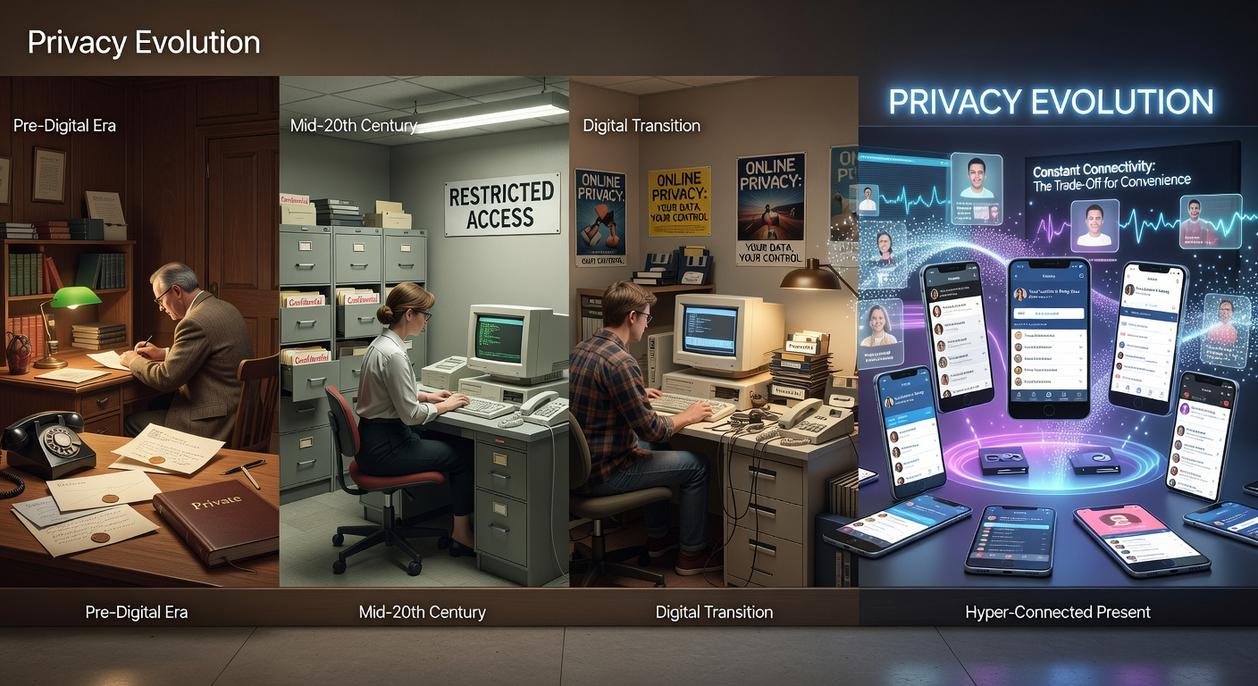
The “Right to be Forgotten”—a legal principle allowing individuals to request deletion of their personal data—is undergoing a serious upgrade. Instead of clunky web forms and ticketing systems, companies are shifting toward automated, cryptographically-verified erasure protocols. In short, deletion is becoming machine-readable, provable, and scalable.
The old way? Slow, expensive, and risky. Manual deletion workflows rely on human intervention across fragmented databases. That means:
- Delays that stretch beyond regulatory deadlines
- Inconsistent deletions across backup systems
- Limited audit trails for regulators
- High non-compliance exposure
And in the era of data privacy trends 2026, regulators are no longer accepting “we tried” as a defense.
What competitors often miss is the architectural shift underneath. Automated data lifecycle management frameworks now map data from ingestion to archival. Meanwhile, immutable ledgers—tamper-resistant records that verify actions—log every deletion request across distributed systems. Think of it as blockchain logic applied to compliance (minus the crypto hype).
For example, a SaaS firm can now trigger deletion APIs that propagate across vendors automatically, generating verifiable proof.
The takeaway? Start mapping your entire data flow today—from collection to third-party sharing. Without that visibility, automation is impossible. For context on how immersive systems are reshaping data ecosystems, see the growing influence of virtual reality in everyday life.
Trend 4: Privacy Enhancing Technologies (PETs) Go Mainstream
The core shift is hard to ignore. Technologies once buried in academic papers—homomorphic encryption (computing on encrypted data), zero-knowledge proofs (proving something without revealing the underlying information), and differential privacy (adding statistical “noise” to protect identities)—are now powering real products.
Take zero-knowledge proofs. Imagine proving you’re over 21 to a streaming service without sharing your birthdate. You confirm the rule without exposing the data. It sounds futuristic (very Mission: Impossible), but it’s already happening.
Some skeptics argue PETs are too complex and expensive for mainstream use. Fair. Early implementations were clunky. However, growing regulatory pressure and rising breach costs—IBM reports the average data breach cost hit $4.45 million in 2023—are forcing innovation (IBM Cost of a Data Breach Report, 2023).
As data privacy trends 2026 accelerate, finance, healthcare, and ad tech are leading adoption. Banks use PETs for fraud detection across institutions. Hospitals collaborate on research without exposing patient files.
Recommendation: If you handle sensitive data, start piloting PET solutions now. Pro tip: begin with a narrow use case, like secure analytics sharing, before scaling.
Building a Privacy-First Future: Your 2026 Action Plan
We’ve explored the big shifts already—AI-driven compliance, user-controlled identity, automated erasure, and Privacy-Enhancing Technologies (PETs). But here’s the real question: are you building for where privacy is going, or where it’s been?
As data privacy trends 2026 accelerate, complexity is rising. Regulations multiply. Consumers expect transparency by default. At the same time, tools powered by machine learning are making compliance faster and smarter (yes, robots might actually save you from spreadsheets).
Some argue that waiting is safer—why invest before mandates hit? Fair point. Yet companies that delay often scramble, overspend, and erode trust.
So what’s your move? Start by auditing your data architecture. Where are deletion requests manual? Could a PET reduce exposure? Choose one upgrade today—and future-proof tomorrow.
Stay Ahead of What’s Next in Tech
You came here to understand where the tech world is heading — from shifting digital behaviors to emerging tools and the forces shaping innovation. Now you have a clearer view of how these changes connect, why they matter, and how trends like data privacy trends 2026 will directly impact the way you build, invest, and operate in the digital space.
The real challenge isn’t finding information. It’s filtering the noise and turning insights into action before the market moves on. Falling behind on security standards, device evolution, or architectural shifts can cost you relevance, revenue, and trust.
The next step is simple: stay plugged into forward-thinking analysis, apply practical tech hacks that create immediate efficiency, and proactively adapt your strategy to align with upcoming privacy and software shifts.
If you’re serious about staying competitive in a fast-moving tech landscape, don’t wait for disruption to force your hand. Join thousands of forward-focused readers who rely on our insights to decode trends early and act confidently. Subscribe now, stay informed, and future‑proof your next move.